
Dust Collector for Mono Layer
OTHER EQUIPMENTS
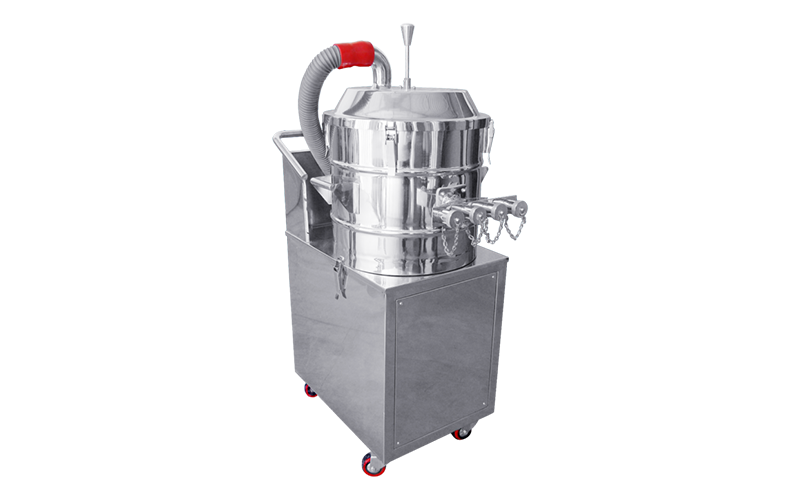
The Dust Collector for mono-layer tablet presses is designed for efficient extraction of fine powder and dust generated during tablet compression. When connected to the designated suction points on the tablet press, it continuously removes excess powder from the compression zone and surrounding areas during production.
Effective dust extraction helps keep the tablet press and compression room cleaner, reduces powder accumulation, and helps minimise powder-related issues such as black spots on tablets, punch jamming and premature punch head wear.
Key Features
• All stainless-steel construction with SS316 contact parts• Dust collection chamber isolated from the blower and motor
• Easily detachable collection drum for convenient removal and washing
• Additional connection ports for tablet dedusters and vacuum-cleaning hoses
• Compact design for convenient installation alongside the tablet press
Frequently Asked Questions
During tablet compression, a significant amount of dust can be generated as the upper
punch tip enters the die bore, particularly at high operating speeds. Fine powder and dust
are also generated around the feed frame and lower punch area during production.
A dust collector continuously extracts this airborne and excess powder, helping to keep the compression zone, tablet press
and surrounding production area clean.
This Dust Collector is primarily designed for single-layer rotary tablet presses.
It can also be used with bi-layer tablet presses. However, for bi-layer applications, some users prefer dust collectors with
separate filter bags or collection arrangements for the two powder layers.
The Dust Collector can also be connected to compatible capsule polishing machines.
Yes. Tablet dedusters normally have a separate dust extraction connection, which can be connected to the Dust Collector subject to the required airflow and suction capacity.
Filter cleaning and replacement frequency depends on the formulation, tablet press operating time and quantity of dust generated.
The filter should normally be cleaned during every product or batch change, in accordance with the user's cleaning procedure.
It should be replaced if dust accumulation or filter deterioration begins to affect airflow or suction performance.
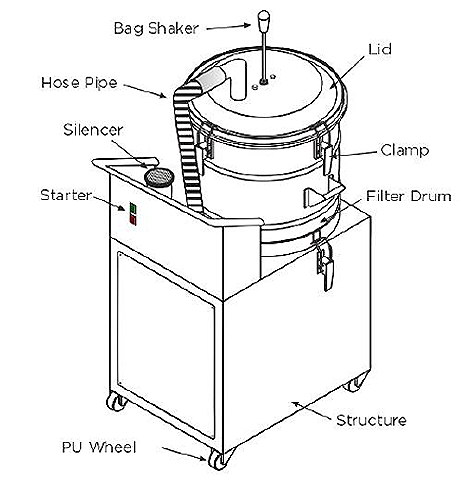
A filter-bag shaking mechanism is also provided. Periodic shaking of the filter bag during production helps dislodge
accumulated powder and maintain effective suction.
Yes, provided the tablet press is equipped with suitable dust extraction or suction ports.
Model selection is primarily based on the required airflow and suction capacity. These depend on factors such as tablet press production capacity, number and size of suction points, ducting arrangement and the quantity of dust generated during compression.
Yes. The extracted powder is collected in a detachable drum designed for easy removal, emptying and cleaning.
Yes. The Dust Collector is designed with smooth stainless-steel surfaces, easily accessible filter areas and a removable collection drum to simplify routine cleaning and maintenance.